- Why Is BIBO Important in Cleanroom Air Filtration Systems?
- What Is BIBO – Bag In Bag Out?
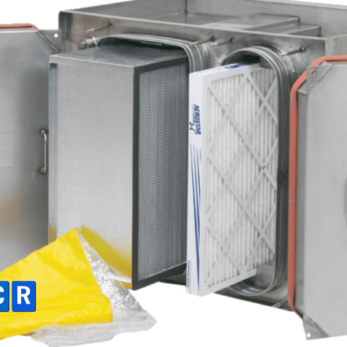
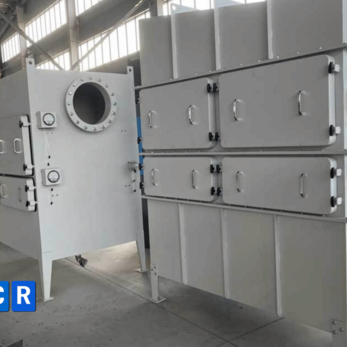
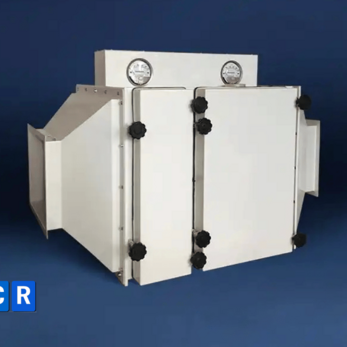
- Basic Structure of a BIBO Filter Housing
- Working Principle of a BIBO System
- Why Does BIBO Help Control Cross-Contamination in Cleanrooms?
- The Role of BIBO in Cleanroom Air Filtration Systems
- Where Is BIBO Commonly Used?
- Comparison Between BIBO and Conventional HEPA Filter Housings
- Key Criteria for Selecting BIBO for Cleanroom Projects
- Notes on BIBO Installation, Operation, and Maintenance
- FAQ – Frequently Asked Questions About BIBO in Cleanrooms
- What Is BIBO in a Cleanroom System?
- Is BIBO Mandatory in Every Cleanroom?
- Does BIBO Use HEPA or ULPA Filters?
- When Should the Filter in a BIBO Be Replaced?
- How Is BIBO Different from a Conventional HEPA Filter Housing?
- What Should Cleanroom Contractors Consider When Selecting BIBO?
- BIBO Is a Safety Solution for High-Risk Air Filtration Systems
BIBO – Bag In Bag Out is a safe filter housing solution that allows filters to be replaced through a protective bag, helping limit the release of dust, microorganisms, or hazardous substances into the environment. This article explains what BIBO is, how it works, and why this equipment is important in cleanroom air filtration systems.
Why Is BIBO Important in Cleanroom Air Filtration Systems?
In a cleanroom system, air control is not limited to supplying clean air to the production area or maintaining the required cleanliness class. A more important issue is the ability to control contamination throughout the operating life cycle of the system, especially during maintenance, replacement, or handling of filters that have been exposed to dust, microorganisms, chemicals, pharmaceutical active ingredients, or hazardous agents. This is the context that makes BIBO a particularly important device in high-risk cleanroom air filtration systems.
BIBO stands for Bag In Bag Out, which can be understood as “put in by bag – take out by bag.” In essence, BIBO is a type of safety filter housing that allows operating personnel to replace HEPA or ULPA filters without directly contacting contaminated filters. HEPA stands for High Efficiency Particulate Air, meaning a high-efficiency air filter. ULPA stands for Ultra Low Penetration Air, meaning a filter capable of retaining extremely small particles with very high efficiency. The key difference of BIBO is not that it “filters better” than a conventional HEPA filter housing, but that it makes the filter replacement process safer, more sealed, and less likely to release contamination.
In environments such as pharmaceutical factories, vaccine production areas, microbiology laboratories, healthcare facilities, chemical handling areas, or high-tech manufacturing facilities, filters may retain many controlled agents after a period of operation. If filter removal is performed by conventional methods, fine dust, microorganisms, or hazardous substances may be released into the technical area, affecting maintenance personnel, the surrounding environment, and even increasing the risk of cross-contamination between areas. BIBO is designed to minimize this risk by using a dedicated protective bag, allowing the used filter to be sealed before it is removed from the filter housing.
Readers often ask: Where is BIBO used, and when is it needed in cleanrooms? The answer is that BIBO is commonly used at supply air, return air, or exhaust air filtration points in systems with a high risk of contamination, especially where filters may contain toxic agents, microorganisms, or active ingredients that require strict control. While a conventional HEPA filter housing mainly focuses on air filtration efficiency, BIBO adds an additional layer of protection during filter maintenance and replacement. Therefore, BIBO is not only a component in a cleanroom HVAC system, meaning the heating, ventilation, and air-conditioning system, but also an operational safety solution that helps maintain the stability, cleanliness, and controllability of the entire system.
What Is BIBO – Bag In Bag Out?
BIBO stands for Bag In Bag Out, which can be translated as “put in by bag – take out by bag.” This term is commonly used in air filtration systems with high safety requirements, especially cleanroom air filtration systems, laboratories, pharmaceutical production areas, vaccine facilities, microbiology areas, chemical facilities, or environments where contaminant release may occur during maintenance. If readers are looking for a short answer to the question “What is BIBO?”, it can be understood as a safe filter housing assembly that allows contaminated filters to be replaced through a dedicated protective bag, minimizing direct operator contact with the filter and preventing contaminants from spreading into the surrounding environment.
In essence, BIBO is not merely a box that contains a HEPA or ULPA filter. HEPA stands for High Efficiency Particulate Air, meaning a high-efficiency air filter. ULPA stands for Ultra Low Penetration Air, meaning a filter capable of retaining extremely small particles with very high efficiency. In many cleanroom systems, HEPA or ULPA filters remove fine dust, microorganisms, and airborne particles. However, when these filters are installed in high-risk areas, they are not only air filtration devices but also collection points for agents that must be controlled. After a period of operation, a filter may contain hazardous dust, microbial spores, pharmaceutical active ingredients, chemicals, or components that may cause cross-contamination. Therefore, the issue is not only how effectively the air is filtered, but also how safely the filter is replaced.
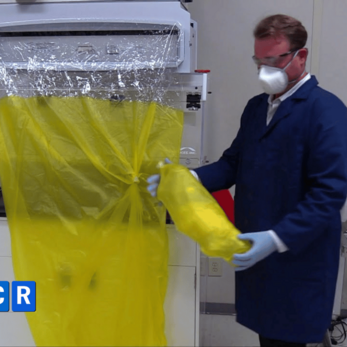
The core of BIBO lies in its bag-based filter replacement mechanism. When a new filter needs to be inserted or an old filter needs to be removed from the housing, the operator does not directly open the unit to contact the filter. Instead, a dedicated protective bag is tightly attached to the access door of the BIBO housing. The old filter is pulled into the bag, after which the bag is tied, clamped, or handled according to a safety procedure before being removed. For a new filter, the insertion process is also performed through the bag to limit the entry of external dust into the system. For this reason, the name Bag In Bag Out directly reflects the operating principle of the device: the filter is put in by bag and taken out by bag.
In a cleanroom HVAC system, BIBO is considered a risk-control solution rather than a simple accessory. HVAC stands for Heating, Ventilation and Air Conditioning. In a cleanroom, HVAC is not only responsible for cooling or ventilation, but also for controlling cleanliness class, pressure, airflow direction, temperature, humidity, and airborne contamination levels. When BIBO is integrated into the HVAC system, it makes filtration and filter maintenance safer, especially at exhaust air, return air, or air filtration points connected to high-contamination-risk areas.
The difference between BIBO and a conventional filter housing lies in the design philosophy. A conventional filter housing mainly focuses on holding the filter in the correct position and ensuring that air passes through the filter according to technical requirements. BIBO, meanwhile, is additionally designed to control risks during filter handling. This is especially important because many contamination incidents in cleanrooms do not occur only during production; they may also arise during maintenance, equipment replacement, or handling of contaminated consumables. In other words, BIBO extends the contamination-control scope of the cleanroom from the operating stage to the maintenance stage.
In cleanroom projects that require strict cross-contamination control, BIBO is often considered from the design stage of the safe air filtration route. This is the critical stage for determining installation location, operating direction, airflow volume, filter grade, maintenance space, and future filter replacement procedures. As a cleanroom equipment supplier for cleanroom contractors, VCR Cleanroom Equipment often advises that BIBO should be carefully evaluated in areas where there is a risk of releasing dust, microorganisms, chemicals, or hazardous active ingredients. When properly selected and integrated, BIBO not only helps the air filtration system operate effectively but also protects operators, safeguards the cleanroom environment, and reduces the risk of cross-contamination throughout the production line.
Basic Structure of a BIBO Filter Housing
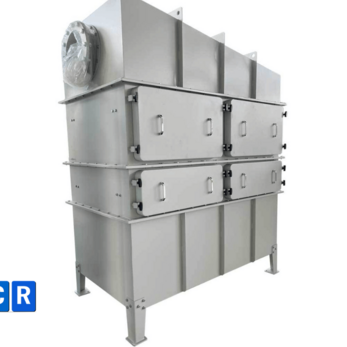
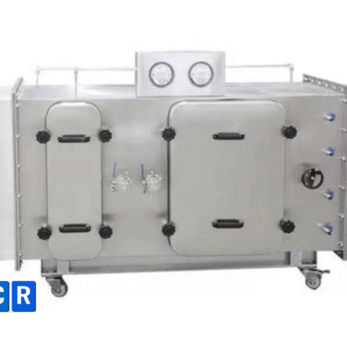
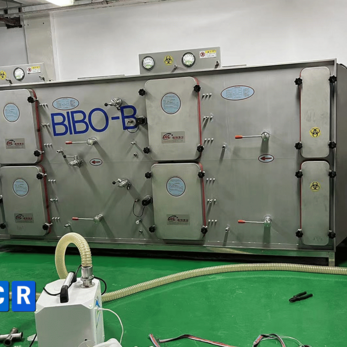
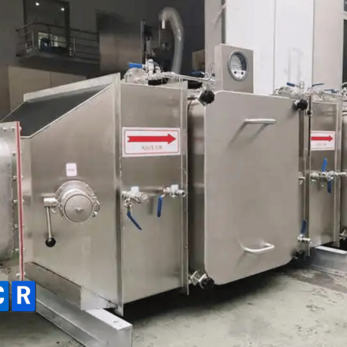
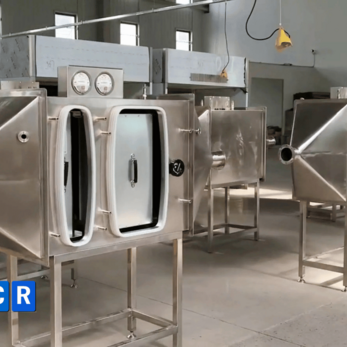
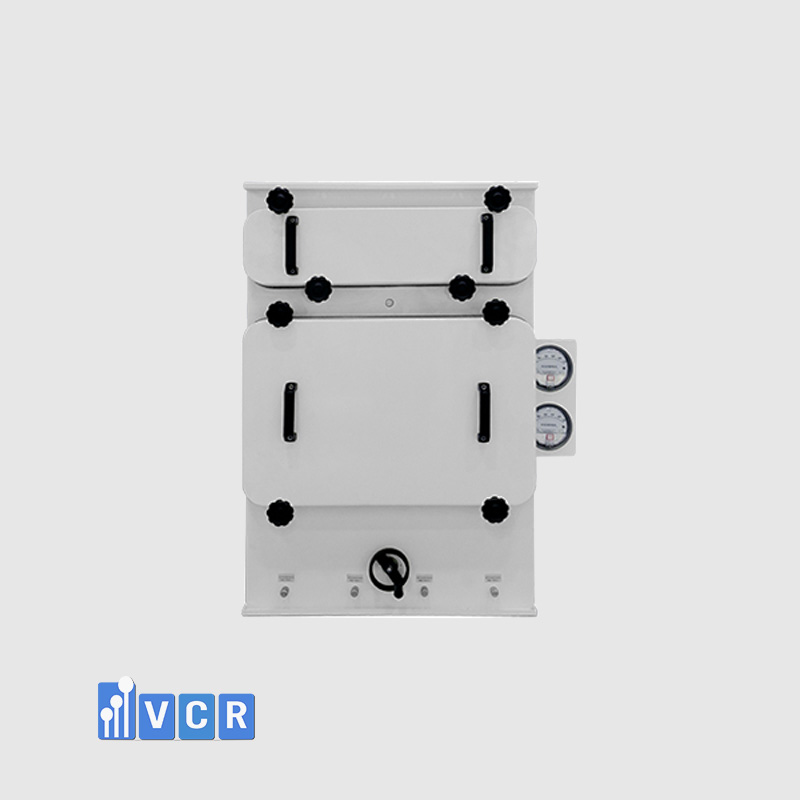
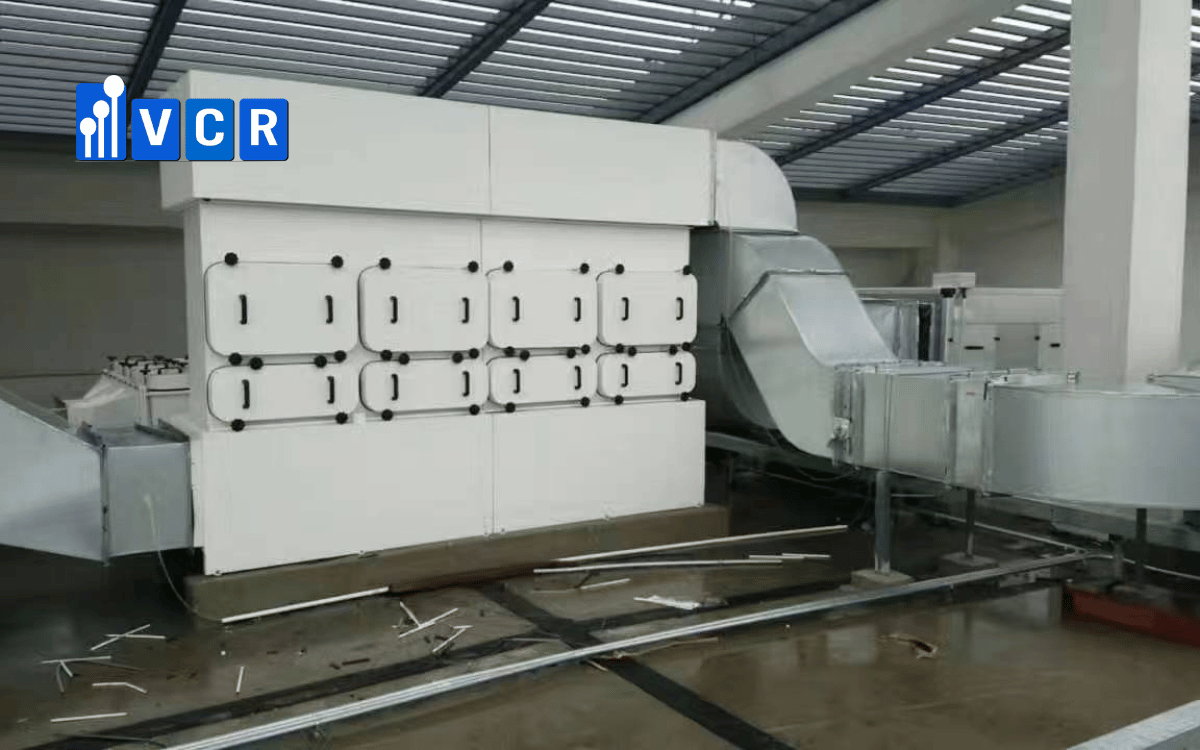
To understand why BIBO can support safe filter replacement and limit contamination release, it is necessary to look at its structure as a filter housing assembly designed with a risk-control mindset. BIBO is not simply a frame that holds a filter; it is a combination of multiple components responsible for sealing, holding the filter, creating an operating space, supporting testing, and protecting operators throughout the equipment’s service life. Every detail in a BIBO filter housing is directly related to three core requirements: ensuring that air passes through the filter correctly, preventing contaminants from leaking outside, and allowing filter replacement under safe conditions.
The first component is the filter housing body. This is the main body of the BIBO, usually manufactured from durable materials suitable for cleanroom environments and the operating conditions of the HVAC system. HVAC stands for Heating, Ventilation and Air Conditioning. The housing body creates a sealed chamber for air to pass through the filter while withstanding airflow pressure during operation. In systems with corrosion risks or strict cleaning requirements, the housing material must be carefully selected to ensure durability, cleanability, and minimal dust accumulation on the surface.
The access door allows personnel to reach the filter area when maintenance or replacement is needed. Unlike conventional filter housings, the access door of a BIBO is not designed to be opened directly so that the filter can be removed by hand. This door is usually equipped with a bag collar, bag clamping mechanism, and sealing system so the operator can replace the filter through a dedicated protective bag. As a result, the dirty filter is not exposed when removed, reducing the risk of dust, microorganisms, chemicals, or hazardous active ingredients spreading into the technical area.
The filter replacement bag is one of the most distinctive parts of BIBO. It is a protective bag attached to the access door to enclose the filter during removal or insertion. When an old filter needs to be replaced, the operator pulls the filter into the bag, then the bag is tied, clamped, or handled according to a safety procedure before it is separated from the housing. The bag collar and clamping mechanism keep the bag fixed on the access door and provide the required sealing during replacement, preventing the formation of contamination escape paths into the surrounding environment. If the bag is the direct protective layer, the collar and clamp are the parts that ensure this layer does not slip, open, or lose its seal during handling.
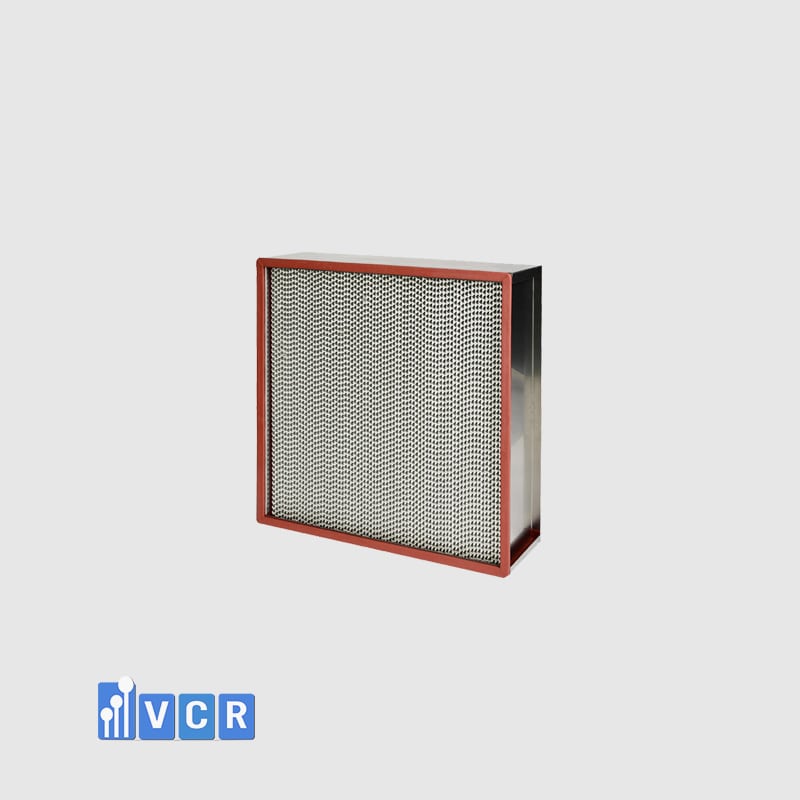
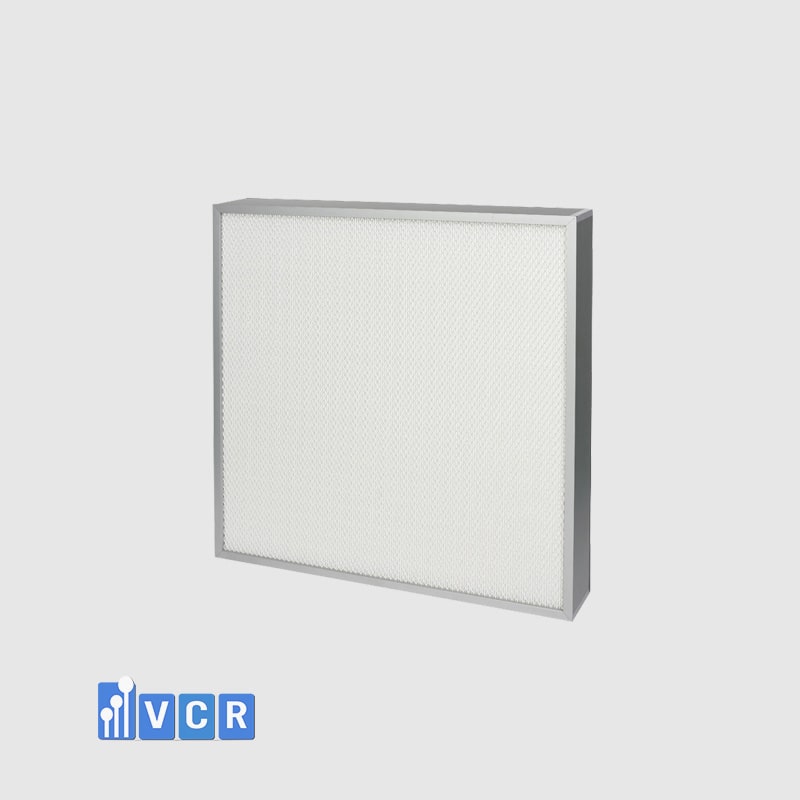
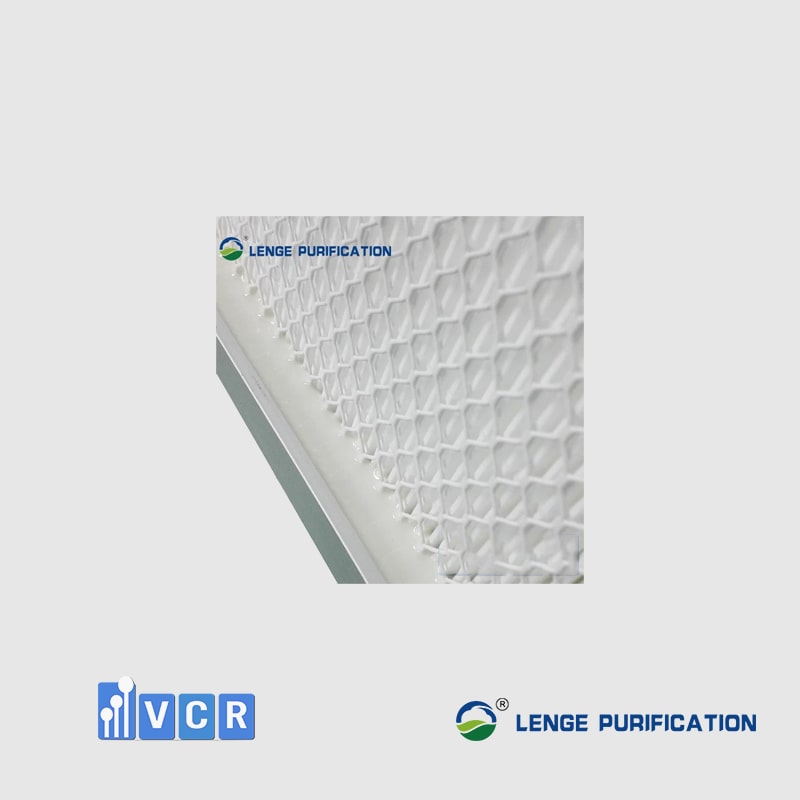
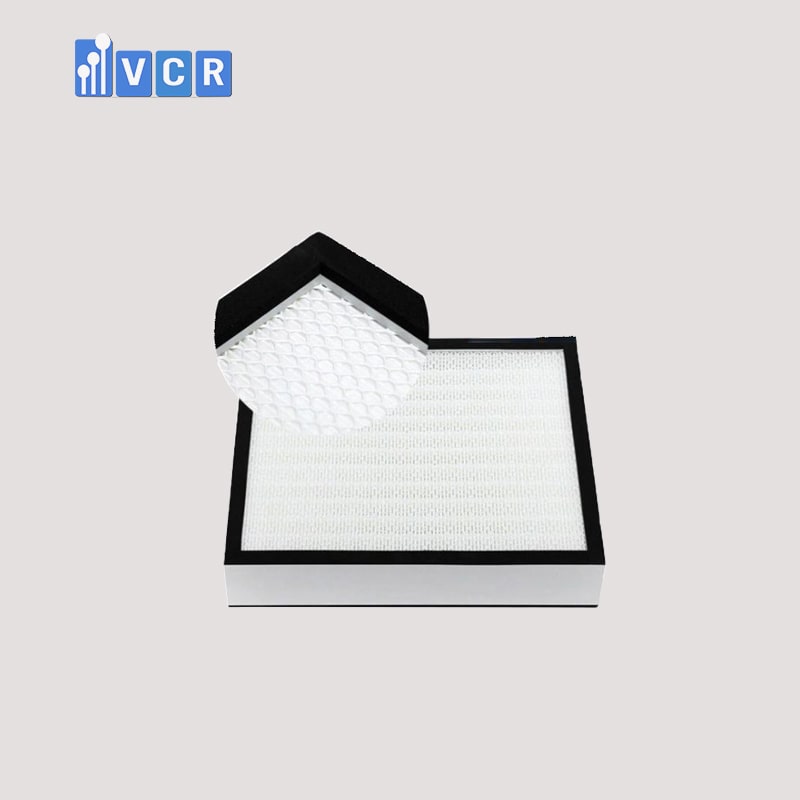
The filter inside the BIBO is usually a HEPA or ULPA filter, depending on system requirements. HEPA stands for High Efficiency Particulate Air. ULPA stands for Ultra Low Penetration Air, meaning a filter capable of retaining ultra-fine particles with higher efficiency than HEPA in certain special applications. The filter is the component that directly captures fine dust, suspended particles, microorganisms, or controlled agents in the airflow. However, filtration performance does not depend only on filter grade; it also depends on how tightly the filter is installed in the housing. If there are gaps around the filter frame, air can bypass the filter instead of passing through the filter media, reducing the contamination-control effectiveness of the entire system.
For this reason, the sealing gasket is an essential component in BIBO construction. Gaskets are usually placed at the contact point between the filter and the filter holding frame, or at points that require airtight sealing, such as the access door and important joints. The role of the gasket is to prevent unfiltered air leakage and maintain the required airflow path through the HEPA or ULPA filter. In a cleanroom environment, even a small gap can affect the reliability of the air filtration system, especially in areas with strict cross-contamination control requirements.
The differential pressure gauge is an accessory that helps monitor filter condition during operation. Differential pressure is the pressure difference between the upstream and downstream sides of the filter. When the filter is clean, the differential pressure is usually within the design range. After a period of use, dust and particles retained on the filter media increase resistance, causing differential pressure to rise. Monitoring the differential pressure gauge helps the operation team know when to inspect, clean the system, or replace the filter, avoiding filter overload that may affect airflow volume and cleanroom operating efficiency.
The leak test port is also an important part of BIBO filter housings used in high-safety environments. This port allows necessary tests to evaluate the tightness of the filter and housing after installation or replacement. With a test port, technicians can verify that the filter has been installed correctly, the sealing gasket is effective, and there are no significant leakage paths in the equipment assembly. In addition, BIBO may include accessories such as filter clamping mechanisms, locking handles, protective doors, trays or guide rails, sampling ports, warning labels, and other details that support maintenance operations.
Overall, the structure of a BIBO filter housing clearly reflects the dual purpose of the equipment: maintaining air filtration performance while ensuring safety during filter replacement. The housing creates a sealed space, the HEPA or ULPA filter captures contaminants, the gasket prevents bypass leakage, the replacement bag protects the operator, the bag clamp maintains sealing during operation, and the differential pressure gauge and leak test port help monitor and verify equipment condition. This coordination makes BIBO a suitable solution for cleanroom systems where safety requirements are not limited to the quality of outlet air, but extend to the entire maintenance process and handling of used filters.
Working Principle of a BIBO System
The working principle of a BIBO system can be understood in two layers: the air filtration principle during normal operation and the safe bag-based filter replacement principle during maintenance. This is what gives BIBO its special value in cleanroom systems with a high risk of contamination. If only the air filtration process is considered, BIBO still follows the basic principle of a filter housing assembly: contaminated air or air that needs treatment is led into the filter housing, passes through the HEPA or ULPA filter, and is then supplied, returned, or exhausted according to system design. However, from the perspective of operational safety, BIBO differs because the filter, once contaminated, can be removed in a sealed state, minimizing direct contact with operators and the surrounding environment.
During operation, airflow enters the BIBO assembly from the inlet side of the filter housing. Depending on the installation location, this may be supply air that needs cleaning before entering the cleanroom, return air from a production area, or exhaust air from an area that may contain dust, microorganisms, chemicals, or hazardous active ingredients. When air enters the BIBO housing, it is directed through the HEPA or ULPA filter. HEPA stands for High Efficiency Particulate Air. ULPA stands for Ultra Low Penetration Air, meaning a filter capable of retaining extremely small particles with very high efficiency in special applications. Dust particles, suspended particles, microorganisms, or contaminants in the airflow are retained on the filter media, while filtered air continues out of the device through the designed duct route.
It is important that all airflow passes through the filter media and does not bypass the filter through gaps between the filter and the housing. Therefore, in a BIBO unit, the sealing gasket, filter clamping mechanism, and housing structure play very important roles. If the filter is not sealed tightly, part of the unfiltered air may leak to the downstream side of the filter, reducing contamination-control performance. In pharmaceutical, vaccine, microbiology, or chemical cleanroom systems, air leakage is not only a technical defect but can also become a safety risk. Therefore, the operating principle of BIBO is always associated with airtightness, stable pressure, and controlled airflow paths.
The core of BIBO lies in the bag-based filter replacement principle. When a filter reaches the time for replacement, the operator does not open the filter housing in a conventional way and remove the filter in an exposed state. Instead, a new protective bag is attached to the operating collar of the BIBO housing. The operating collar is the connection point between the filter replacement door and the protective bag. The bag is fixed by a bag clamp or tightening ring to ensure that it does not slip, open, or lose its seal, while creating a temporary enclosed space throughout the handling process. Only after the bag is securely attached does the operator open the internal access door.
After the access door is opened, the dirty filter is gradually pulled into the bag. This is the most important step in the Bag Out process, meaning “taking out by bag.” At this point, the old filter may have retained toxic dust, microorganisms, pharmaceutical active ingredients, or contaminants from previous operation. Instead of being exposed directly to outside air, the filter is completely enclosed in the protective bag. Once the filter is fully inside the bag, the bag is tied, clamped, or heat-sealed, depending on the operating procedure and risk level of the area. The bag section containing the filter is then separated from the BIBO housing and sent for disposal or treatment according to safety requirements. As a result, the dirty filter is removed without directly releasing contaminants into the technical area.
Conversely, Bag In is the process of “putting in by bag.” When a new filter needs to be installed, it is inserted through the protective bag attached to the operating collar. The goal of Bag In is to prevent external dust from entering the filter chamber while keeping the installation process under control. The new filter is pushed into the correct position inside the housing and then fixed by the filter clamping mechanism or filter holding frame. When the filter is properly positioned, the sealing gasket is evenly compressed to ensure that air does not bypass the filter during operation. After completion, the operating bag is handled according to procedure, the equipment door is closed, and the system can be tested before stable operation resumes.
Viewed as a complete cycle, the principle of BIBO is not only to filter air, but also to control the process of inserting and removing filters from the system. Air is treated by HEPA or ULPA filtration during operation, while contamination release risks are controlled by the bag mechanism during maintenance. This is why BIBO is often preferred at exhaust air filtration points, return air filtration points, or areas where used filters may become secondary contamination sources. With this design, BIBO helps maintain the safety of a cleanroom air filtration system not only while the equipment is running, but also when the equipment is stopped for filter replacement, maintenance, and handling of contaminated filters.
Why Does BIBO Help Control Cross-Contamination in Cleanrooms?
In cleanrooms, cross-contamination is one of the risks that must be most strictly controlled. Cross-contamination can be understood as the unwanted transfer of contaminants between areas, products, materials, substances, microorganisms, or biological agents during production, research, operation, and maintenance. In a pharmaceutical factory, cross-contamination may occur when the active ingredient of one product spreads into the production area of another product. In a microbiology laboratory, cross-contamination may refer to microorganisms spreading from one operating area to a cleaner area. In a potentially contaminated exhaust air system, cross-contamination may occur when dust, chemicals, or hazardous agents leak back into the technical area during filter replacement. Therefore, cross-contamination control is not only a matter of the production line; it is also directly related to how the air filtration system is designed, operated, and maintained.
BIBO helps control cross-contamination first by preventing contaminated filters from coming into direct contact with the surrounding environment during replacement. After a period of operation, HEPA or ULPA filters in a cleanroom system may retain fine dust, suspended particles, microorganisms, spores, chemicals, pharmaceutical active ingredients, or other hazardous agents. HEPA stands for High Efficiency Particulate Air. ULPA stands for Ultra Low Penetration Air, meaning a filter capable of retaining extremely small particles with very high efficiency in certain special applications. When such a filter is removed in a conventional way, agents accumulated on the filter surface may be shaken, dropped, or released into the air, creating a secondary source of contamination. With BIBO, the dirty filter is pulled into a protective bag, then tied, clamped, or heat-sealed before removal, significantly reducing the risk of contamination release in the maintenance area.
The value of BIBO lies in its ability to control a point that is often underestimated in cleanrooms: the maintenance moment. When the system operates normally, airflow, pressure, cleanliness class, and filtration efficiency are usually controlled according to design. However, when the system is stopped for filter replacement, the equipment door is opened, the filter is removed, and technical personnel directly intervene in the air path, increasing the risk of cross-contamination. Without a suitable sealing mechanism, contaminants from the old filter may adhere to sleeves, tools, technical floors, equipment surfaces, or spread to nearby areas. BIBO reduces this risk by creating a physical isolation layer between the contaminated filter and the external environment.
In pharmaceutical production areas, especially areas involving highly potent active ingredients, hormones, antibiotics, cytotoxic drugs, or highly sensitive materials, BIBO helps limit the risk of active substances spreading during filter replacement. This is important because even a very small amount of an unwanted active substance may affect other products, operating personnel, or the production environment. In raw material weighing areas, where material dust is easily generated during handling, the air filtration system may accumulate a significant amount of dust on the filter. When BIBO is used, handling of used filters is better controlled, preventing material dust from returning to the working space or spreading into the technical route.
In biosafety laboratories and microbiological areas, BIBO plays a special role in preventing the release of biological agents. Filters in these systems may retain microorganisms, spores, or particles carrying biological agents. If filters are removed improperly, operators may face exposure risks and the surrounding environment may become contaminated. With the Bag Out mechanism, BIBO keeps the filter sealed before it is removed from the device. This is an important protective layer alongside other measures such as standard operating procedures, personal protective equipment, and decontamination requirements.
BIBO is also suitable for negative-pressure isolation areas and potentially contaminated exhaust air systems. Negative pressure is commonly used to prevent contaminated air from escaping the controlled area, but during filter replacement, contamination release may still occur at the maintenance point if there is no sealing solution. In exhaust routes from chemical, microbiological, or hazardous-agent handling areas, BIBO helps ensure that used filters do not become new contamination sources. As a result, the device not only protects the cleanliness class of the room but also protects technical personnel, support areas, and the surrounding environment.
It can be said that BIBO helps control cross-contamination by controlling both airflow and the filter life cycle. During operation, air is forced to pass through the HEPA or ULPA filter to remove contaminant particles. During maintenance, the contaminated filter is sealed before removal. It is this combination of air filtration control and filter replacement control that makes BIBO an important solution for cleanrooms with high safety requirements, where risks exist not only during production but also in every maintenance operation of the system.
The Role of BIBO in Cleanroom Air Filtration Systems
In cleanroom air filtration systems, BIBO should not be viewed as a separate device, but as a link in the overall air-control strategy. A stable cleanroom does not rely only on HEPA or ULPA filters; it also depends on airflow organization, pressure control, supply-return-exhaust arrangement, airflow volume maintenance, and ensuring that maintenance does not create new contamination risks. In this context, BIBO plays its role: it helps the air filtration system remain not only clean during operation, but also safe during filter replacement.
First, BIBO can be applied in the supply air filtration route of a cleanroom. Supply air is the airflow that has been treated before being introduced into the area requiring cleanliness control. In many systems, HEPA or ULPA filters are used to remove fine dust, suspended particles, and microbial agents before the air enters the room. HEPA stands for High Efficiency Particulate Air. ULPA stands for Ultra Low Penetration Air, meaning a filter capable of retaining extremely small particles with very high efficiency in certain special applications. When BIBO is installed on the supply air route, it helps protect the filter replacement process and limits dust or contamination from the technical environment from entering the filter chamber and affecting the quality of air downstream of the filter.
On the return air route, BIBO has a different significance. Return air is the airflow collected from a production area, laboratory, or controlled space and sent back to the air handling system. In areas where material dust, microorganisms, chemicals, or pharmaceutical active ingredients are generated, filters on the return air route may accumulate significant amounts of controlled agents. If these filters are removed in a conventional way, contaminants may spread into the technical area or nearby areas. BIBO reduces this risk by allowing contaminated filters to be pulled into a protective bag and removed in a sealed state.
The role of BIBO is even clearer on exhaust air filtration routes. Exhaust air from high-risk areas such as highly potent active ingredient processing rooms, raw material weighing areas, microbiology laboratories, negative-pressure isolation rooms, or chemical-use areas may contain particles, vapors, dust, or biological agents that require strict control. In this case, the filter not only protects the cleanliness of the room but also protects the external environment before air is discharged. When an exhaust air filter needs replacement, BIBO helps control a very sensitive point: how the filter that has captured contaminants is removed from the system. The Bag Out mechanism limits direct contact between the dirty filter, maintenance personnel, and the surrounding space.
In addition to filtration, BIBO is also related to maintaining cleanliness class and pressure control in cleanrooms. A room’s cleanliness class depends not only on filter efficiency but also on stable airflow volume and system tightness. When a filter becomes clogged, differential pressure rises, airflow volume may decrease, and the pressure balance between areas may be affected. Differential pressure is the pressure difference between two sides of a filter or between two different spaces. With accessories such as differential pressure gauges, leak test ports, and filter sealing mechanisms, BIBO supports the operation team in monitoring filter condition, identifying replacement timing, and verifying tightness after installation.
However, it is important to understand that BIBO does not replace the entire cleanroom air filtration system. BIBO does not create cleanliness class by itself, nor does it independently control all temperature, humidity, pressure, or airflow direction. These factors still belong to the overall design of the HVAC system. HVAC stands for Heating, Ventilation and Air Conditioning. The main role of BIBO is to make filter installation, replacement, and handling safer in high-contamination-risk areas. In other words, if HEPA or ULPA filters are the protective layer when air passes through the system, BIBO is the protective layer when people intervene in the system.
This is particularly important for maintenance personnel. In many cleanroom projects, operators and technicians may not directly participate in production but still come into contact with high-risk points when replacing filters, opening technical doors, or handling contaminated consumables. BIBO helps reduce exposure by creating a physical isolation layer between the operator and the dirty filter. When combined with standard operating procedures, personal protective equipment, and proper waste handling methods, BIBO contributes to a safer operating system, not only for products but also for people.
As a cleanroom equipment supplier for cleanroom contractors, VCR Cleanroom Equipment can support the selection of suitable BIBO configurations according to cleanliness class, filter type, airflow direction, leak test requirements, and actual operating conditions of each project. BIBO selection should not be based only on filter housing size or filter grade, but on the entire use context: which direction the airflow follows, what agents the filter may be contaminated with, whether the installation location provides sufficient operating space, whether filter replacement requires leak testing after installation, and what safety standards the project requires. When correctly integrated into the overall air-control strategy, BIBO becomes an important device that helps cleanroom systems operate more stably, safely, and reliably over the long term.
Where Is BIBO Commonly Used?
BIBO is commonly used in environments where air filters may become collection points for dust, microorganisms, chemicals, pharmaceutical active ingredients, or hazardous agents after a period of operation. In other words, BIBO is not necessary in every cleanroom system, but it is highly important in areas where filter replacement may create a risk of contamination release. This is why BIBO is widely found in pharmaceutical factories, vaccine production areas, microbiology laboratories, biosafety laboratories, hospitals, research centers, chemical plants, hazardous exhaust treatment areas, and certain industrial environments requiring high-level operator protection.
In pharmaceutical factories, BIBO is often considered for areas with risks of raw material dust generation, highly potent active ingredients, or products sensitive to cross-contamination. Raw material weighing areas, formulation areas, powder processing areas, production areas for highly active drugs, or areas with strict cross-contamination control requirements are all locations where BIBO may be needed. When HEPA or ULPA filters capture active ingredient particles during operation, filter removal must be carefully controlled. HEPA stands for High Efficiency Particulate Air. ULPA stands for Ultra Low Penetration Air, meaning a filter capable of retaining extremely small particles with very high efficiency in certain special applications. Without a sealing mechanism, used filters may release active substances into the technical area or other production zones.
In vaccine production, microbiology laboratories, and biosafety rooms, the role of BIBO becomes even clearer. These environments may involve microorganisms, biological samples, spores, infectious agents, or materials requiring strict control. Filters in supply air, return air, or exhaust air systems may retain particles carrying biological agents. During filter replacement, if the filter is not properly sealed, the exposure risk for maintenance personnel and the contamination risk for the surrounding environment may increase. BIBO reduces this risk by allowing the dirty filter to be placed inside a protective bag before it is separated from the filter housing.
In hospitals and healthcare facilities, BIBO may be used in isolation areas, negative-pressure rooms, testing areas, sample handling rooms, or exhaust systems that may contain biological agents. In negative-pressure isolation areas, the purpose of the ventilation system is to prevent potentially contaminated air from escaping to the outside. However, during filter replacement, the point of contact between the operator and the equipment becomes a separate risk. BIBO helps control this risk by removing the filter in a sealed state, limiting contaminants from adhering to tools, protective clothing, or the technical area.
In chemical plants, research centers, and hazardous exhaust treatment systems, BIBO is often used at points where airflow may carry chemical dust, vapors, or hazardous particles. Here, the filter is not only a device for protecting air quality inside the production area, but also a barrier that protects personnel and the external environment. Once the filter has accumulated contaminants, removal, packaging, and transport for treatment must be performed in a way that limits exposure. BIBO meets this need by turning filter replacement from a direct open operation into a bag-controlled operation.
It is important to distinguish clearly between using BIBO for supply air and exhaust air. For supply air, the focus is protecting the clean environment downstream of the filter. Air after filtration is delivered into the area requiring cleanliness control, so the system must ensure that air does not leak, bypass the filter, or become contaminated during replacement. In this case, BIBO helps maintain the reliability of the supply air route, especially in cleanrooms with high control requirements.
For exhaust air, the focus is not only on air quality after filtration, but also on preventing contaminants from escaping during maintenance. Exhaust filters are often installed downstream of high-risk areas, so used filters may contain many controlled agents. If filters are replaced incorrectly, the old filter itself may become a source of contamination release. Therefore, BIBO on exhaust air routes is often considered an important solution for protecting operators, technical areas, and the surrounding environment.
In general, BIBO is used where safety requirements do not stop at cleaning the air, but extend to the entire process of maintaining and handling used filters. Whether installed for supply air, return air, or exhaust air, the common objective of BIBO is to control contamination-release risks at the most sensitive moment of an air filtration system: the moment when people intervene to replace the filter.
Comparison Between BIBO and Conventional HEPA Filter Housings
BIBO and conventional HEPA filter housings are both related to air-quality control in cleanrooms, but they are not identical in purpose, filter replacement safety, or application range. A conventional HEPA filter housing is mainly designed to hold the filter in the correct position, ensure airflow passes through the filter, and supply clean air to the controlled area. BIBO, meanwhile, is designed with an additional safety layer for filter installation, replacement, and handling after use. Therefore, while conventional HEPA filter housings focus on filtration performance, BIBO focuses on both filtration performance and maintenance safety.
HEPA stands for High Efficiency Particulate Air. In many standard cleanroom systems, a conventional HEPA filter housing can effectively meet requirements for filtering fine dust, suspended particles, and some microbial agents from the airflow. This equipment is suitable for low- or medium-risk areas where used filters do not contain many hazardous substances and where filter replacement does not create a serious contamination-release risk. For example, in some support areas, clean corridors, airlocks, standard supply air areas, or industrial cleanrooms that do not handle hazardous materials, a standard HEPA filter housing may be a reasonable technical and cost choice.
However, when filters may be contaminated with toxic agents, microorganisms, chemicals, or highly potent pharmaceutical active ingredients, conventional HEPA filter housings begin to show limitations. The issue is not HEPA filtration capability during operation, but the moment when the filter needs to be removed from the system. If the filter has captured active ingredient dust, microbial spores, or hazardous particles, opening the filter housing and directly removing the filter may cause contaminants to spread into the technical area. This creates risks for maintenance personnel, the surrounding environment, and neighboring cleanroom areas. In this case, BIBO is the safer choice because the dirty filter is pulled into a protective bag, then tied or heat-sealed before being removed from the equipment.
In terms of safety during filter replacement, this is the clearest difference between the two solutions. With a conventional HEPA filter housing, the operator usually has to open the cover or remove the filter holding frame, then take the filter out directly. Even if personal protective equipment is used, this process still carries a risk of dust or contaminant release if the filter is contaminated. With BIBO, the Bag Out process allows the old filter to be sealed before leaving the filter housing. The Bag In process also allows the new filter to be inserted under more controlled conditions. Therefore, BIBO protects not only the cleanroom system but also the personnel performing maintenance.
In terms of investment cost, conventional HEPA filter housings are usually less expensive, simpler in structure, and easier to deploy in common systems. BIBO has a higher investment cost because its structure is more complex, including a sealed housing, access door, bag collar, replacement bag, bag clamping mechanism, sealing gasket, leak test port, and safety-support accessories. In addition to equipment cost, BIBO also requires appropriate operating space, standard operating procedures, and trained personnel to replace filters correctly. However, in high-risk areas, this cost should be viewed as an investment in operational safety, cross-contamination control, and long-term incident reduction.
In terms of maintenance requirements, conventional HEPA filter housings have simpler procedures, but lower control during filter replacement. BIBO requires stricter operations, including checking the bag, attaching it to the operating collar, securing it with the clamp, pulling the filter into the bag, tying or sealing the bag, and then handling the filter according to regulations. After a new filter is installed, the system may also require tightness testing, differential pressure checking, and operating condition verification before use. Differential pressure is the pressure difference between the two sides of a filter, commonly used to monitor filter clogging or resistance during operation.
It is important to note that not every cleanroom area must use BIBO. If the area has a low risk level, the filter does not contact hazardous agents, and conventional filter replacement procedures can still control safety, a standard HEPA filter housing may be suitable. Conversely, in areas such as pharmaceutical production with highly potent active ingredients, microbiology laboratories, raw material weighing areas, negative-pressure isolation rooms, hazardous exhaust systems, or environments with high cross-contamination risks, BIBO should be seriously evaluated from the design stage. When this decision is made early, contractors and designers can properly arrange airflow routes, operating space, testing positions, and maintenance procedures, helping the cleanroom system operate safely and sustainably.
Key Criteria for Selecting BIBO for Cleanroom Projects
Selecting BIBO for a cleanroom project should not be based only on filter housing size or equipment price. BIBO is directly related to filtration efficiency, safety during filter replacement, cross-contamination control, and the stability of the entire HVAC system. HVAC stands for Heating, Ventilation and Air Conditioning. Therefore, to select the right equipment, contractors and designers must evaluate multiple technical factors at the same time, from airflow volume, filter grade, construction material, tightness, and installation direction to real future maintenance conditions.
The first criterion is the airflow volume passing through the BIBO. The airflow volume must match the system design, cleanliness requirements, and purpose of each area. If airflow volume is too low, the cleanroom may fail to achieve the required air change rate or maintain the desired pressure state. If airflow volume is too high for the capacity of the filter and BIBO housing, differential pressure may rise quickly, overload the fan system, and shorten filter service life. Therefore, airflow volume should be determined according to HVAC drawings and balanced with filter size, housing cross-sectional area, and actual operating conditions.
The second criterion is HEPA or ULPA filter grade. HEPA stands for High Efficiency Particulate Air. ULPA stands for Ultra Low Penetration Air, meaning a filter capable of retaining extremely small particles with very high efficiency in some special applications. Not every project needs ULPA, and not every location uses the same filter grade. Pharmaceutical, vaccine, microbiology, highly potent active ingredient, or high-risk exhaust areas must be carefully evaluated according to the type of particles to be controlled, required cleanliness class, and hazard level of agents that may accumulate on the filter. Choosing the wrong filter grade may unnecessarily increase cost or fail to meet contamination-control requirements.
The housing material is also important. The BIBO housing must have mechanical strength, corrosion resistance, and suitability for the hygiene conditions of the installation area. In many cleanroom applications, materials must be easy to clean, resistant to dust accumulation, and able to withstand appropriate cleaning chemicals. In environments with corrosive gases, chemicals, or periodic decontamination requirements, housing materials must be selected more carefully to avoid degradation during operation. A BIBO housing with a good filter but unsuitable housing material may still reduce system reliability over time.
Tightness is a criterion that cannot be ignored when selecting BIBO. The equipment must ensure that air passes through the filter according to design and does not leak through gaps around the filter frame, access door, bag collar, or joints. Tightness affects not only filtration efficiency but also safety when handling airflow with contamination risks. The higher the risk level of the area where BIBO is used, the more strictly tightness must be considered. At the same time, sealing gaskets, filter clamping mechanisms, door locks, and contact surfaces must be designed in coordination to maintain sealing during operation.
Installation direction and operating space must also be evaluated from the design stage. BIBO can be arranged in different orientations depending on the duct route, technical room location, and maintenance access. If the space in front of the access door is too narrow, attaching the bag, pulling the filter out, sealing the bag, or inserting a new filter may become difficult. This is a common mistake when the equipment is selected at the end of the project without prior consideration in the technical layout. With BIBO, maintenance space is not a secondary factor; it is a required condition for the equipment to perform its safety function properly.
The bag replacement method is directly related to the risk level of the application area. The replacement bag must be compatible with the filter size, operating collar, bag clamping mechanism, and used-filter handling procedure. In high-risk areas, the bag must not only enclose the filter but also allow tying, clamping, or heat sealing before it is separated from the equipment. If the bag is unsuitable or the operation is inconvenient, the Bag Out process may become unsafe and increase the risk of dust, microorganisms, or chemicals being released outside.
Leak testing capability is an important criterion in cleanroom projects that require verification after installation or filter replacement. The leak test port helps technicians evaluate whether the filter has been installed correctly, whether the gasket is sealed, and whether any unfiltered air leakage path exists. In areas requiring strict control, simply installing a new filter and immediately operating the system may not be sufficient. The system needs conditions for testing, verification, and recordkeeping to ensure that the equipment operates according to design requirements.
The differential pressure gauge should also be considered when selecting BIBO. Differential pressure is the pressure difference between the two sides of the filter, commonly used to monitor filter clogging during operation. As the filter accumulates dust and contaminant particles, resistance increases and differential pressure rises. By monitoring differential pressure, the operation team can know when to inspect or replace the filter, avoiding filter overload that may affect airflow volume, room pressure, and HVAC system performance.
In addition, cleaning conditions and decontamination requirements also affect BIBO selection. Some areas may require frequent surface cleaning, decontamination spraying, or special treatment procedures before filter replacement. In such cases, the equipment must have suitable surfaces, minimal dead corners, easy cleanability, and compatibility with the cleaning method used at the factory. If the project requires decontamination before opening the equipment or before handling the filter, the BIBO configuration must be considered from the beginning to avoid conflict between equipment design and operating procedures.
Finally, BIBO must be compatible with the overall HVAC system. The equipment must match the duct route, system pressure, airflow direction, installation location, testing method, maintenance method, and cleanliness requirements of each area. When working with cleanroom contractors, VCR Cleanroom Equipment can support the determination of BIBO specifications according to HVAC drawings, cleanliness requirements, installation location, and the specific characteristics of the manufacturing industry. Selecting correctly from the design stage helps reduce later modifications and ensures that BIBO is not simply a device installed into the system, but part of the air-control and operational safety strategy for the entire cleanroom project.
Notes on BIBO Installation, Operation, and Maintenance
The effectiveness of BIBO depends not only on the equipment itself but also heavily on how it is installed, operated, and maintained in practice. A BIBO filter housing with the correct structure but installed in the wrong position, lacking operating space, or without a suitable filter replacement procedure may still reduce the safety level of the system. Therefore, from the cleanroom design and construction stage, BIBO should be considered as a technical item connected to ductwork, technical rooms, maintenance operations, used-filter handling, and long-term operation records.
The first point to note is the installation location. BIBO should be arranged in a position that is convenient for access, inspection, and filter replacement, while still being suitable for the supply air, return air, or exhaust air route of the HVAC system. HVAC stands for Heating, Ventilation and Air Conditioning. If BIBO is installed too high, too close to a wall, too close to other equipment, or in a difficult-to-access location, maintenance personnel will have trouble attaching the bag, pulling out the filter, or inserting a new filter. With BIBO, the operating space in front of the filter replacement door is not an auxiliary clearance; it is a necessary condition for the equipment to fulfill its safety purpose.
The bag replacement operating space must be large enough for the operator to attach the bag to the operating collar, secure it with the clamping mechanism, pull the dirty filter into the bag, and tie or heat-seal the bag before separating it from the equipment. If the space is too narrow, these operations can easily become rushed or inaccurate, or the bag may twist, slip, or tear during use. This is especially dangerous in areas where the filter may contain active ingredient dust, microorganisms, chemicals, or hazardous agents. Therefore, when arranging BIBO, the filter size, bag length, filter pulling direction, and movement path of the removed filter must be calculated in advance.
After installation, tightness testing is an important step. BIBO tightness is related to many points, such as duct joints, access doors, filter gaskets, bag collars, filter clamping mechanisms, and housing joints. If leakage occurs, part of the air may bypass the filter, or contaminants may escape during operation and maintenance. In areas with strict requirements, leak testing after installation or after each filter replacement should be performed according to a suitable procedure to verify that the filter is installed correctly and the filter housing remains sealed.
During operation, differential pressure monitoring is an important method for tracking filter condition. Differential pressure is the pressure difference between the two sides of the filter. When the filter is clean, differential pressure is usually within the design limit. When dust, suspended particles, or contaminants accumulate on the filter media, resistance increases and differential pressure rises. If differential pressure exceeds the allowable limit, airflow volume may decrease, room pressure may become unbalanced, and cleanliness control performance may be affected. Therefore, the differential pressure gauge should be monitored periodically, recorded, and used as one basis for determining filter replacement timing.
The filter replacement procedure must not be taken lightly when operating BIBO. Operators need to follow the correct sequence: prepare the replacement bag, inspect the bag and clamping mechanism, attach the bag to the operating collar, open the access door, pull the dirty filter into the bag, tie or heat-seal the bag, separate the bag from the equipment, insert the new filter, and fix the filter in the correct position. Every step affects the safety level of the entire process. If even a small step is skipped, such as failing to clamp the bag tightly or failing to check the gasket after installing the new filter, contamination release or air leakage may still occur.
The dirty filter bag after being separated from the BIBO must be handled according to the nature of the contaminants retained by the filter. For ordinary dust, handling requirements may be simpler. But for microorganisms, chemicals, highly potent pharmaceutical active ingredients, or hazardous materials, the bag containing the filter must be transported, stored, decontaminated, or disposed of according to the facility’s safety regulations. The dirty filter bag should not be treated as ordinary technical waste, because in many cases it is where controlled agents have accumulated after a period of system operation.
In addition to the equipment and procedure, personnel training is decisive. Operators need to understand what BIBO is, why filters must be replaced by bag, what risks may arise if operations are performed incorrectly, and how to handle situations when the bag opens, tears, or the filter does not enter the correct position. These operations should be included in an SOP. SOP stands for Standard Operating Procedure. A good SOP should clearly describe responsibilities, required tools, conditions before filter replacement, operation sequence, personal protective equipment requirements, dirty filter handling methods, and post-completion inspection steps.
Finally, all BIBO installation, inspection, filter replacement, and maintenance activities should be recorded. Maintenance records help trace filter replacement time, differential pressure values before and after replacement, bag condition, gasket condition, leak test results, and the personnel performing the work. In cleanroom systems with strict control requirements, records serve not only internal management but also as evidence that the equipment is operated according to stable procedures. When BIBO is installed correctly, operated properly, and fully documented, it truly fulfills its role as a solution that protects the air filtration system, operators, and the cleanroom environment over the long term.
FAQ – Frequently Asked Questions About BIBO in Cleanrooms
What Is BIBO in a Cleanroom System?
BIBO is a type of safety filter housing that allows filters to be replaced through a dedicated protective bag, helping limit the release of contaminants into the surrounding environment. BIBO stands for Bag In Bag Out, meaning “put in by bag – take out by bag.” In cleanroom systems, this equipment is often used at locations where filters may contain dust, microorganisms, chemicals, pharmaceutical active ingredients, or hazardous agents after a period of operation. The important point of BIBO is not only its ability to contain HEPA or ULPA filters, but also its mechanism that allows operators to remove old filters in a sealed state, reducing direct contact and limiting contamination release during maintenance.
Is BIBO Mandatory in Every Cleanroom?
Not every cleanroom is required to use BIBO. In low-risk areas, where hazardous agents are not handled and used filters do not contain significant contaminants, a conventional HEPA filter housing may be sufficient. However, in areas with risks of toxic contamination, microbial contamination, cross-contamination, or release of highly potent active ingredients, BIBO should be seriously considered from the design stage. Common examples include pharmaceutical production areas, vaccine facilities, raw material weighing areas, microbiology laboratories, biosafety rooms, negative-pressure isolation rooms, and exhaust systems with contamination risks.
Does BIBO Use HEPA or ULPA Filters?
BIBO can use HEPA or ULPA filters depending on the air filtration system requirements, required cleanliness class, and risk level of the area. HEPA stands for High Efficiency Particulate Air, meaning a high-efficiency air filter. ULPA stands for Ultra Low Penetration Air, meaning a filter capable of retaining extremely small particles with very high efficiency in certain special applications. If the area requires high particle control but not an exceptional level, HEPA is usually the common choice. If the application requires more stringent particle control, ULPA may be considered. The choice between HEPA and ULPA should be based on HVAC design, cleanliness requirements, and the nature of the agents to be controlled.
When Should the Filter in a BIBO Be Replaced?
The timing for replacing a filter in a BIBO should not be determined subjectively. It should be based on multiple factors, such as differential pressure, operating time, filter performance test results, actual area conditions, and the maintenance regulations of each system. Differential pressure is the pressure difference between the two sides of the filter and is commonly used to monitor filter clogging. As the filter accumulates dust or contaminant particles, resistance increases and differential pressure rises. If differential pressure exceeds the design threshold, airflow volume may decrease, room pressure may become unstable, and cleanliness control performance may be affected. Therefore, the operation team should monitor differential pressure periodically and record it in maintenance documentation.
How Is BIBO Different from a Conventional HEPA Filter Housing?
The main difference is that BIBO allows safe bag-based filter replacement, while a conventional HEPA filter housing is usually opened directly to remove the filter. Conventional HEPA filter housings are suitable for many standard cleanroom systems where filters do not contain significant hazardous agents after use. BIBO, on the other hand, is more suitable for areas where filters may have been contaminated with hazardous dust, microorganisms, chemicals, or pharmaceutical active ingredients. With BIBO, the old filter is pulled into a bag, then tied, clamped, or heat-sealed before being removed from the device. This significantly reduces contamination-release risk and exposure risk for maintenance personnel.
What Should Cleanroom Contractors Consider When Selecting BIBO?
When selecting BIBO, contractors should evaluate multiple technical factors at the same time, including airflow volume, HEPA or ULPA filter grade, filter housing tightness, installation location, operating direction, bag replacement space, leak testing capability, and actual operating requirements of each area. BIBO should not be selected separately based only on filter size; it should be considered within the overall cleanroom HVAC system. HVAC stands for Heating, Ventilation and Air Conditioning. If BIBO is selected correctly but installed in a location with insufficient operating space, bag-based filter replacement will be difficult and may reduce safety performance. Therefore, contractors should evaluate BIBO from the air-route design stage, especially for pharmaceutical, microbiology, chemical, hazardous exhaust, or high cross-contamination-control areas.
BIBO Is a Safety Solution for High-Risk Air Filtration Systems
BIBO is an important solution in high-risk cleanroom air filtration systems, especially in areas where filters may contain dust, microorganisms, chemicals, pharmaceutical active ingredients, or hazardous agents after a period of operation. The value of BIBO lies not only in housing HEPA or ULPA filters, but also in helping make filter replacement safer. HEPA stands for High Efficiency Particulate Air, meaning a high-efficiency air filter. ULPA stands for Ultra Low Penetration Air, meaning a filter capable of retaining extremely small particles with very high efficiency in certain special applications.
In a cleanroom system, an effective filter alone is not enough to ensure comprehensive safety. When a contaminated filter is removed from the system, contamination release risks may appear if the filter replacement process is not properly controlled. BIBO addresses this sensitive point through the Bag In Bag Out mechanism, meaning “put in by bag – take out by bag,” allowing the dirty filter to be sealed before removal. As a result, the equipment helps protect operators, safeguard the cleanroom environment, control cross-contamination, and maintain the stability of the air filtration system throughout its operating life cycle.
Because BIBO is directly related to duct arrangement, operating direction, bag replacement space, maintenance procedures, tightness testing, and safety standards, it should be considered from the project design stage rather than only during equipment procurement. When properly integrated into the cleanroom HVAC system, BIBO is not merely a safe filter housing; it is part of the overall risk-control strategy for environments that require high levels of cleanliness, sealing, and safety.
Hai VCR